
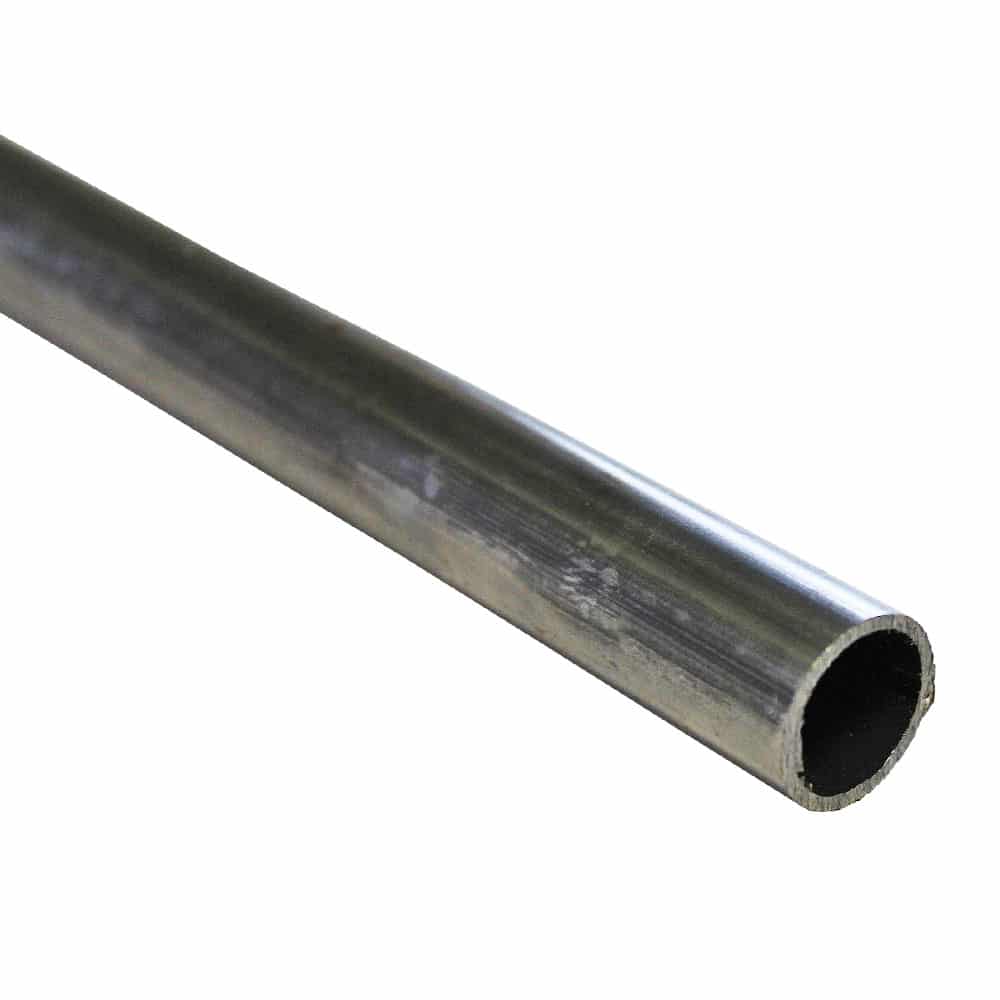
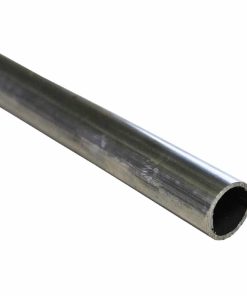
19.05 x 1.5mm Round Mild Steel Metal Tubes ERW Round Tube
Original price was: $8.50.$5.11Current price is: $5.11.
✔ Specialists In Rapid Shipments Of Any Size
✔ FREE UK Delivery Included
✔ Immediate Express Dispatch From Stock
✔ Tracked Delivery with Order Updates
✔ 30-Day Returns Accepted
@ ☏ Bespoke Lengths & Larger Quantities Available
Hey there! Let’s talk about metal tubes, specifically 19.05 x 1.5mm Round Mild Steel Metal Tubes by Speciality Metals. Not only do these tubes come in various lengths, but they are also durable, versatile and cost-effective. Plus, they are easily recyclable! These metal tubes have excellent welding, forming, bending and machining abilities, making them an ideal choice for a wide range of applications.
From DIY projects to professional construction, these tubes have got you covered. So, why not give them a try?

19.05 x 1.5mm Round Mild Steel Metal Tubes
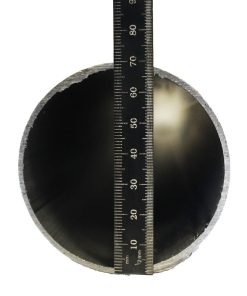
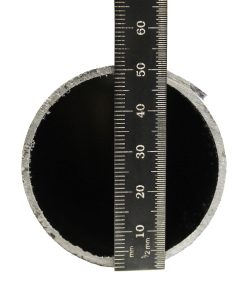
19.05 x 1.5mm round mild steel metal tubes are used in many structural and engineering applications. The size refers to the outside diameter and then the thickness of the wall.
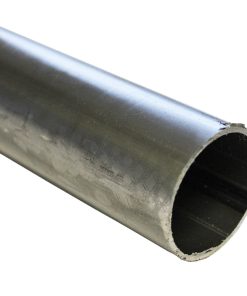
ERW means Electric Resistance Welded. ERW tube is made when steel strip is welded to form a tube shape. The tube is continuously seam welded which means that there is a neat weld running along the inside of the tube.
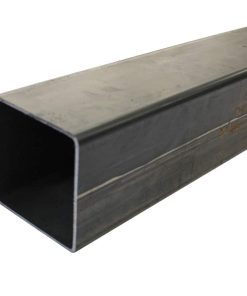
Mild steel round tube is widely used in a variety of applications and also comes in both square and rectangular options.
Metal tubes are an essential component in various industries, and Speciality Metals offers the 19.05 x 1.5mm Round Mild Steel Metal Tubes. These tubes come in various lengths to fit specific requirements, making them a versatile solution for multiple applications. Not only are they durable, but their cost-effective price point is a significant advantage for businesses. Additionally, these tubes are recyclable, contributing to the overall sustainability of operations. Their excellent welding, forming, bending and machining abilities make them an ideal choice for various manufacturing processes. With all these features, it’s no surprise why metal tubes are a popular choice in the engineering world.
Why Choose Speciality Metals
Speciality Metals is known to be the United Kingdom’s best up-and-coming small-quantity metal company.
- FREE UK delivery on all orders
- Order dispatch within 24 hours of order
- Located in Warrington, UK which is the UK home of mesh and metals
- Our experienced staff are experts in the mesh market and care personally about your customer experience
Furthermore we stock a vast range of round tube options that compliment our mesh range perfectly.
Over 50,000 customers of Specialty Metals are provided with fast, friendly customer service every year. We’re the place to try when you need metal of any shape and size. We’re based in Warrington, UK. We pride ourselves on our rapid turnaround and a large range of options.
Key information:
- Shape – Round Tube
- Grade – EN10305E220
- Hot or Cold Rolled – Hot Rolled
- External Diameter – 19.05mm
- Wall Thickness – 1.5mm
- Internal Diameter – 16.05mm
We also carry a wide range of mild steel sheet metal, angle iron and flat bar.
Mild steel is a quality strong metal. However it is not rust proof and may do so over time. Please use galvanised or stainless steel if you need resistance to rust. If this metal tube does show signs of rust then simply remove this with WD40 or fine sanding.
- Bending & Forming – Fair. You could only bend this tubing with bending tools but not by hand
- Corrosion Resistance – Poor. Mild steel is uncoated, so there is no additional protection against corrosion
- Machining & Grinding – Good. Mild steel is the metal choice for many forms of machining and grinding, but stainless steel can also offer good results
- Welding – Excellent. You could easily weld with this tubing to suit your requirements
- Painting – Good. We suggest that a mild steel product is always used when a layer of paint needs to be applied. Galvanised and stainless steel will not take paint
- Wear Resistance – Fair. As there is no protective layer, we suggest stainless steel or galvanised steel if you require a stronger wear resistance
The grade of plain steel that we have available has mechanical properties that provide excellent machinability, formability and weldability.
Mild steel can be welded and it’s also suitable for painting. Mild steel is a magnetic grade of metal. Magnets will stick to this sheet but it is not itself a magnet.
FAQs About This Product
How Do I Measure the Size of a Mild Steel Tube?
Measuring the size of a mild steel tube involves determining its outer diameter, inner diameter, wall thickness and length. Here’s a step-by-step guide to accurately measure a mild steel tube:
-
Outer Diameter (OD):
- Place a caliper or a measuring tape around the outside of the tube.
- Record the measurement where the tape meets the zero or where the caliper shows a reading. This measurement gives you the outer diameter.
-
Wall Thickness:
- Use a micrometer for a more accurate measurement. Place one end of the micrometer on the inside wall and the other on the outside wall of the tube.
- Tighten the micrometer until it fits snugly around the tube wall and take the reading. This gives you the wall thickness.
-
Inner Diameter (ID):
- This can be calculated by subtracting twice the wall thickness from the outer diameter. Alternatively, you can directly measure the inner diameter using calipers by inserting them inside the tube and expanding them until they fit snugly, then reading the measurement.
-
Length:
- Use a measuring tape or a ruler to measure the end-to-end length of the tube. Ensure the tube is on a flat surface and measure from one end to the other.
It’s crucial to make sure the measuring tools (like calipers, micrometers and measuring tapes) are calibrated and accurate. If you need precise measurements for specific applications, consider investing in high-quality measuring instruments and ensure they are maintained and calibrated periodically. Additionally, always refer to manufacturer specifications when available, as they can provide exact measurements for the tubes they produce.
Is There a Difference in Strength Between Square and Round Mild Steel Tubes?
The difference in strength between square and round mild steel tubes is not purely based on their shapes but on how they respond to loads and the specific application. Here’s a breakdown of the differences in strength characteristics between the two shapes:
-
Load Distribution:
- Round Tubes: They distribute loads more uniformly in all directions due to their symmetrical shape. When subjected to equal bending loads from all sides, round tubes typically perform better than square tubes.
- Square Tubes: Square tubes might have a slight edge in resistance to bending in one direction (aligned with one of its faces). However, they can be less effective when the load is applied diagonally.
-
Torsional Strength:
- Round Tubes: Round tubes generally have higher torsional (twisting) strength compared to square tubes of the same weight or volume. This makes them a preferred choice for applications where torsional loads are prevalent.
- Square Tubes: They may not handle torsional loads as efficiently as round tubes, but they offer good resistance to bending in two principal directions.
-
Material Usage and Weight:
- For a given weight or material volume, a round tube typically offers more resistance to buckling and bending than a square tube. This is because the material is more evenly distributed around the circumference in a round shape, allowing it to effectively resist loads from all directions.
-
Applications and Practical Considerations:
- Round Tubes: Often preferred for applications like machinery, automotive components and where torsional strength is crucial.
- Square Tubes: Commonly chosen for structures, frames and other applications where they can be easily joined and where their square faces provide convenient mounting points.
-
Aesthetics and Fabrication:
- Sometimes, the choice between square and round is not just based on strength but also on aesthetics, ease of fabrication and how they fit into the overall design.
In conclusion, the inherent strength differences between square and round mild steel tubes depend on the specific application and loading conditions. It’s essential to consider the type of load (torsional, bending, axial, etc.) and the direction of the load when deciding between the two shapes.
How Does Mild Steel Tube Respond to Chemicals?
Mild steel tube’s response to chemicals largely hinges on the corrosive nature of the specific chemical and the environment in which the interaction takes place. Mild steel, being an iron-based material, is prone to rust when exposed to moisture, especially in the presence of corrosive agents. Many chemicals can accelerate the corrosion process. For instance, acids, even weak ones like acetic acid, can lead to rapid oxidation and degradation of mild steel. Similarly, environments with high salinity or chemicals like chlorides can intensify rusting. In alkaline conditions, mild steel tends to corrode at a slower rate than in acidic environments. However, certain alkaline compounds, in the presence of oxygen, can also corrode steel. Protective coatings and treatments, such as paint, epoxy or galvanisation, can safeguard mild steel tubes from chemical attacks, extending their lifespan in chemically aggressive environments. When considering mild steel tubes for applications with potential chemical exposure, it’s paramount to have a clear understanding of the specific chemicals involved and take preventive measures accordingly.
Check out our blog discussing cutting, welding and shaping mild steel round tube. It will prove a useful read to help you to make an informed decision on which material would work best for you.
We are also very proud of our ever expanding YouTube channel.
Our goal for our blogs and help guides is to answer as many questions as possible to help to explain the possibilities of mesh to our customers. Contact us today if you have any questions at all. We are always really keen to help in any way that we can.
We are also very proud of our highly popular eBay store, check us out there too.
Be the first to review “19.05 x 1.5mm Round Mild Steel Metal Tubes ERW Round Tube”
Related products
Mild Steel Square Tube
Mild Steel Round Tube
Mild Steel Square Tube
Mild Steel Round Tube
Aluminium Round Tube
Aluminium Round Tube
Mild Steel Round Tube
Reviews
There are no reviews yet.