
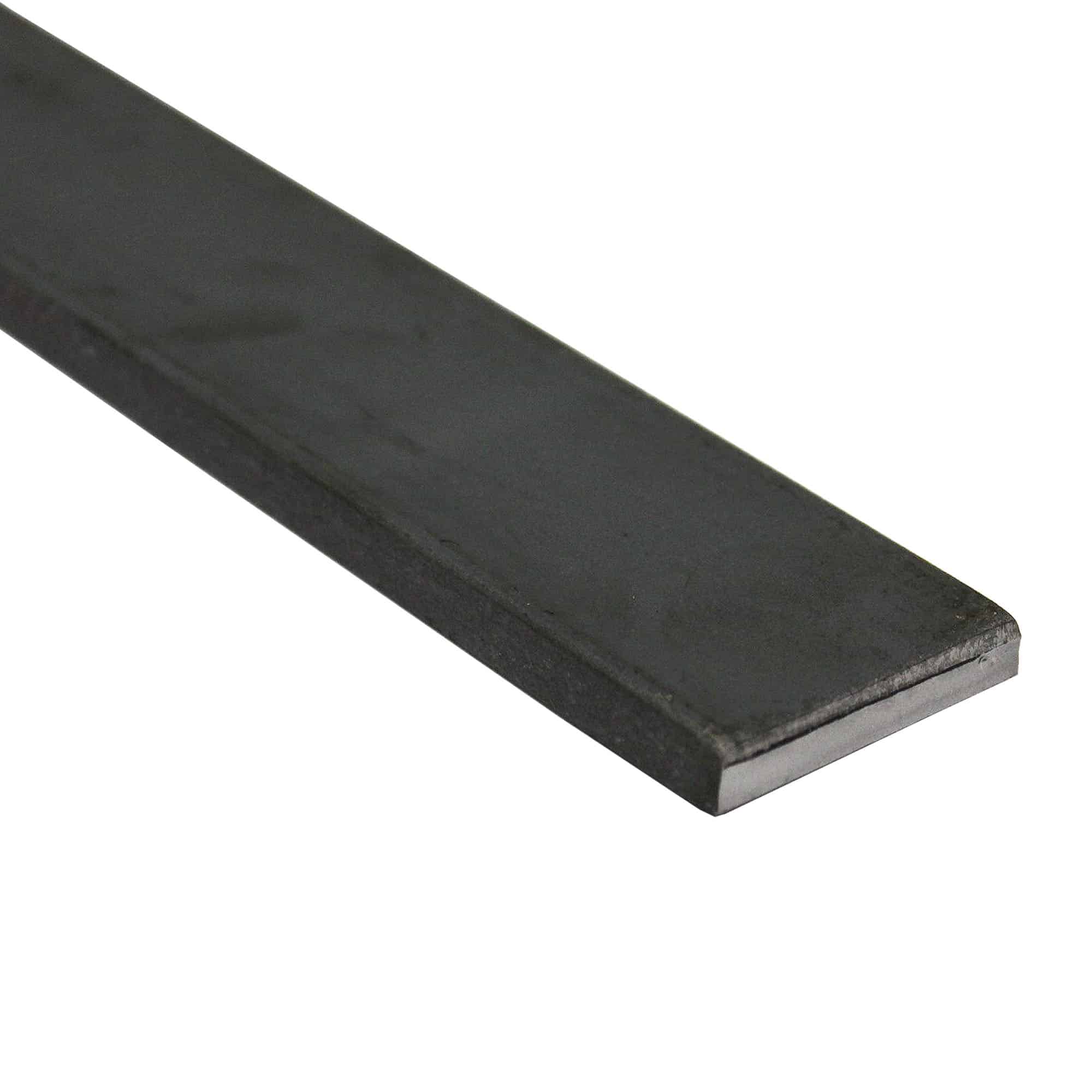
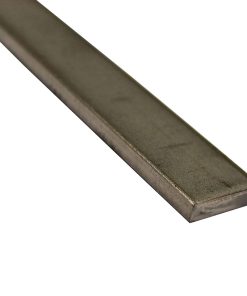
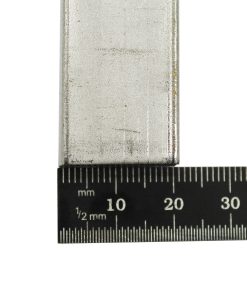
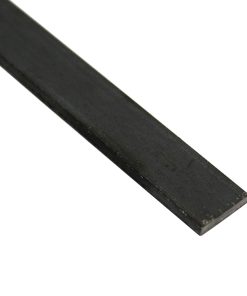
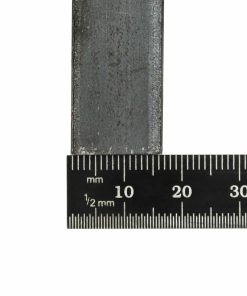
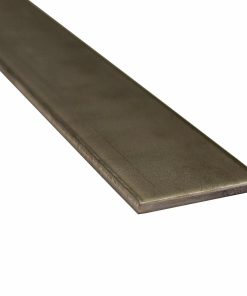
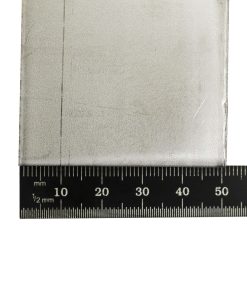
40mm Width x 8mm Thick Plain Mild Steel Flat Bar Section
Original price was: $4.05.$3.45Current price is: $3.45.
£ MULTIBUY SAVINGS – Order 3 For 10% Off
✔ Specialists In Rapid Shipments Of Any Size
✔ FREE UK Delivery Included
✔ Immediate Express Dispatch From Stock
✔ Tracked Delivery with Order Updates
✔ 30-Day Returns Accepted
£ Check Out Our Clearance Listing For Savings
@ ☏ Bespoke Sizes & Larger Sheets Available
Looking to build something sturdy and reliable? Look no further than the 40mm Width x 8mm Thick Plain Mild Steel Flat Bar Section by Speciality Metals! A trusted UK supplier offering various lengths, this steel flat bar is both durable and versatile, making it perfect for a wide range of projects. With its great welding, forming, bending and machining abilities, you can easily mold this bar to your desired shape and size. Plus, at a cost-effective price point, you won’t break the bank when stocking up on this essential component.
Best of all, this steel flat bar is completely recyclable and incredibly malleable, so you can rest easy knowing you’re choosing an eco-friendly option that will stand the test of time.

40 x 8mm Mild Steel Flat Bar
Our mild steel flat bars are available in S275 grade. Engineers and contractors use flat bar extensively in the manufacture of support braces, latches, mechanical parts, industrial tools, etc., as well as for many DIY projects.
For those in need of sturdy and reliable material, the mild steel flat bar offers a versatile solution. As a popular choice in the construction and manufacturing industries, this steel strip provides a solid foundation for various structures and machinery. With its uniform width and thickness, the mild steel flat bar offers consistent strength and durability for a wide range of applications.
As a result of its good to excellent formability, mild steel flat bar can easily be joined by welding processes or by means of fixings such as rivets, bolts and screws.
Speciality Metals UK supply a wide range of steel flat bars that are suitable for your project needs. They offer 40mm Width x 8mm Thick Plain Mild Steel Flat Bars that are durable, versatile and cost-effective. Furthermore, its great welding, forming, bending and machining abilities make it an ideal choice for any industrial application. As an eco-friendly and adaptable material, this steel flat bar is recyclable and malleable. For your next project, count on Speciality Metals for high-quality steel flat bars.
Key information:
- Width – 40mm
- Thickness – 8mm
- Shape – Flat
- Grade –S275
- Finish – Mill
Speciality Metals are the best suppliers for you because:
- FREE UK delivery on all orders
- Order dispatch within 24 hours of order
- Located in Warrington, UK which is the UK home of mesh and metals
- Our experienced staff are experts in the mesh market and care personally about your customer experience
We also carry a wide range of mild steel sheet metal, angle iron and round tube.
FAQs About This Metal Strip
How do you Join Mild Steel Flat Bars?
Joining mild steel flat bars can be achieved through various methods, depending on the application, required strength, appearance and tools/equipment available.
-
Welding:
- Arc Welding (Stick Welding): One of the most common welding methods used for joining steel. A flux-covered electrode is used to produce an electric arc that melts the steel and joins it together.
- MIG (Metal Inert Gas) Welding: Uses a wire feed to supply the filler material and an inert gas to shield the weld from contaminants.
- TIG (Tungsten Inert Gas) Welding: Uses a non-consumable tungsten electrode and an inert gas shield. This method provides a very clean and precise weld.
- Flux-Cored Arc Welding: Similar to MIG but uses a special tubular wire filled with flux. It can be used with or without shielding gas.
- Before welding, ensure that the flat bars are clean and free from rust, paint or any other contaminants.
-
Bolting:
- Drill holes into the flat bars where they meet.
- Use suitable bolts and nuts to fasten the flat bars together.
-
Riveting:
- Like bolting but instead of bolts and nuts, you use rivets. A hole is drilled into the flat bars, a rivet is inserted and then the end of the rivet is “peened” or shaped to hold the two pieces together.
-
Adhesive Bonding:
- For some applications, especially where aesthetics are a concern or where welding or drilling isn’t feasible, strong industrial adhesives can be used. However, this method is not as strong as welding and may not be suitable for structural applications.
-
Brazing or Soldering:
- These are methods of joining metal using a filler metal with a melting point below that of the base metal. The filler metal flows into the gap between the parts to be joined and is drawn in by capillary action. Brazing provides a strong joint, but not as strong as a welded joint.
-
Mechanical Fasteners:
- Clamps, brackets and other types of mechanical fasteners can be used to join flat bars without altering the steel’s properties.
When choosing a method, consider the following:
- The load or stress the joint will be subjected to.
- The appearance you desire for the finished joint.
- The tools and equipment you have available.
- Any post-joining treatments (like painting or galvanising).
- Whether the joint needs to be permanent or temporary.
Safety is paramount. Always wear appropriate personal protective equipment (PPE) like gloves, safety glasses and welding helmets (for welding) and work in a well-ventilated area.
Is it Possible to Machine Mild Steel Flat Bar?
Mild steel flat bars are indeed machinable due to their low carbon content, making them more pliable than higher carbon steels. The machining of these bars can encompass a range of operations such as turning, milling, drilling, tapping and grinding. When machining, it’s pivotal to select the right tools, with high-speed steel (HSS) and carbide tools being the typical choices. The balance between cutting speed and feed rate is crucial for optimising tool wear and achieving the desired surface finish. Using coolants or cutting fluids can greatly assist in reducing heat and friction, which enhances the machining process and prolongs tool life. Additionally, ensuring the flat bar is securely held in place using clamps, vises or specialised fixtures is vital for safety and precision. Lastly, continuous removal of metal chips prevents interference and potential damage during the machining process. Overall, with the right tools and techniques, mild steel flat bars can be machined effectively to achieve the desired specifications and finishes.
Are Mild Steel Flat Bars Environmentally Friendly?
Mild steel flat bars, like other steel products, have both environmentally friendly aspects and environmental challenges. On one hand, steel is highly recyclable, and mild steel flat bars can be melted down and reformed multiple times without significant degradation in quality. This recyclability reduces the need for raw iron ore extraction, subsequently minimising environmental impact and conserving resources. On the other hand, the production of steel, including mild steel flat bars, involves processes that can be energy-intensive and produce greenhouse gases. For instance, the traditional blast furnace method of producing steel from iron ore releases a significant amount of carbon dioxide.
Additionally, mining activities for iron ore can lead to habitat destruction and other environmental issues. However, the steel industry has been making strides in adopting more sustainable practices, like the increased use of electric arc furnaces which recycle scrap steel. The industry is also researching carbon capture and storage technologies to further reduce emissions. In conclusion, while the production of mild steel flat bars presents some environmental challenges, the material’s recyclability and the industry’s efforts towards sustainability enhance its eco-friendly profile.
Check out our recent article ‘Everything You Need to Know About Bright Mild Steel Flat Bar’ for a deeper dive into steel metal strip.
Our goal for our blogs and help guides is to answer as many questions as possible to help to explain the possibilities of mesh to our customers.
We are also very proud of our ever expanding YouTube channel.
Contact us today if you have any questions at all. We are always really keen to help in any way that we can.
We are also very proud of our highly popular eBay store, check us out there too.
Thank you for checking out our product.
Be the first to review “40mm Width x 8mm Thick Plain Mild Steel Flat Bar Section”
Related products
304 Stainless Steel Flat Bar
25mm Width x 5mm Thick Metal Flat Bar Stainless Steel Strips
304 Stainless Steel Flat Bar
Aluminium Flat Bar
304 Stainless Steel Flat Bar
304 Stainless Steel Flat Bar
Reviews
There are no reviews yet.