
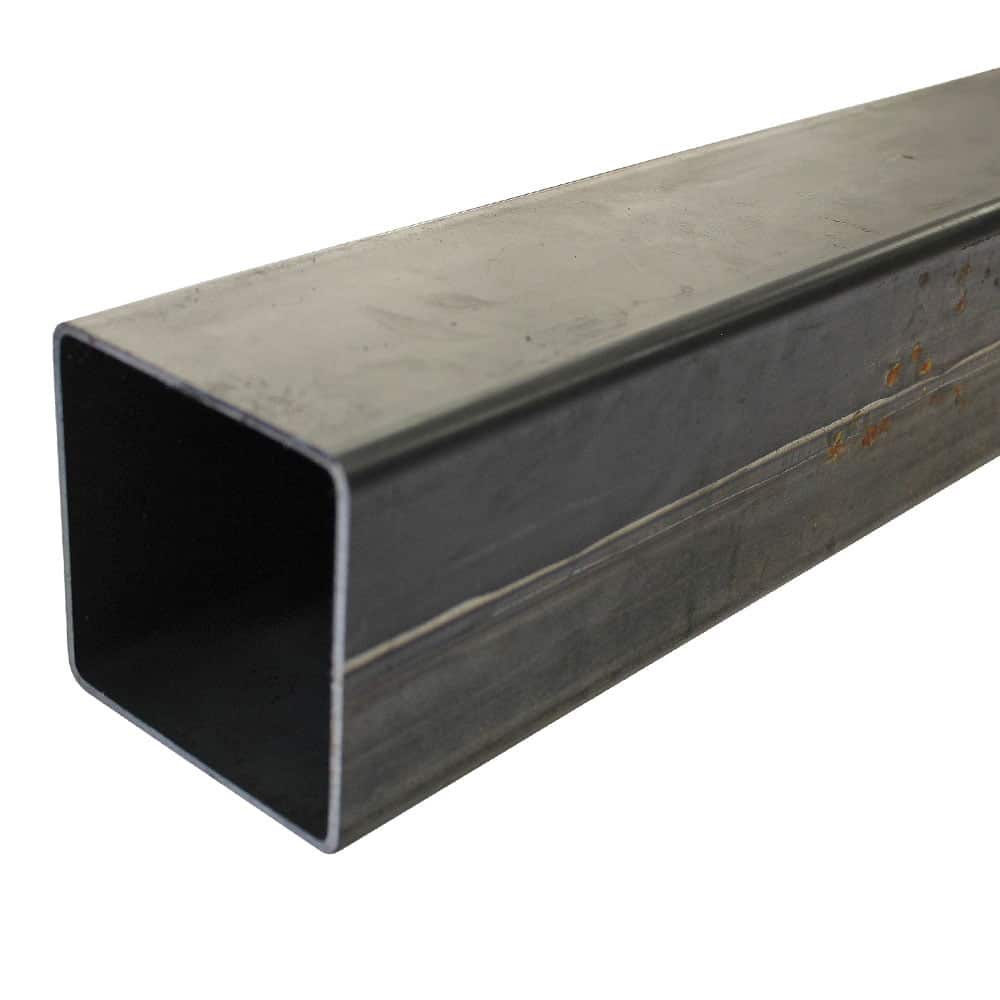
90mm x 90mm x 3mm Mild Steel Box Tubing Hollow Section
Original price was: $10.58.$6.34Current price is: $6.34.
£ MULTIBUY SAVINGS – Order 3 For 10% Off
✔ Specialists In Rapid Shipments Of Any Size
✔ FREE UK Delivery Included
✔ Immediate Express Dispatch From Stock
✔ Tracked Delivery with Order Updates
✔ 30-Day Returns Accepted
@ ☏ Bespoke Cuts & Longer Lengths Available
Looking for a durable, versatile and cost-effective solution to all your steel needs? Look no further than the 90mm x 90mm x 3mm Mild Steel Box Tubing Hollow Section by Speciality Metals. Available in various lengths, this product brings you all the benefits of steel in a convenient, hollow form. And when it comes to working with steel, this tubing has got you covered. With excellent welding, forming, bending and machining abilities, you can be sure that your project will be a success. Plus, with its recyclable properties, it’s an environmentally friendly choice too.
Choose steel box tubing for your next project and see the difference it can make!

90 x 3mm Square Steel Box Tubing
Speciality Metals is one of the leading suppliers of mild steel box tubing in the United Kingdom. Additionally, in addition to stocking only the best products, we provide the most helpful customer service by providing bespoke cutting and fast shipping.
Box sections, also known as mild steel hollow sections or ERW tubes, are widely used in a variety of applications. The durability of this material permits it to be used for a wide range of applications, including traffic signs, pipeline construction, automobile repair and as a structural steel.
Steel box tubing is a highly versatile and durable option for a wide range of industrial applications. The 90mm x 90mm x 3mm Mild Steel Box Tubing Hollow Section offered by Speciality Metals is available in various lengths and offers excellent welding, forming, bending and machining abilities. It is a cost-effective option that is also environmentally friendly since it is recyclable. Its durability and versatility make it ideal for use in construction, agriculture, automotive and other industries. Furthermore, it is a low-maintenance option that can withstand harsh weather conditions and extreme temperatures without corroding or rusting. For those looking for a reliable option, Mild Steel Box Tubing is an excellent choice.
Mild Steel
Mild steel square tube box section is a quality strong metal product. However it is not rust proof and may do so over time. Please use galvanised or stainless steel if you need resistance to rust. If this metal tube does show signs off rust then simply get this off with WD40 or fine sanding.
- Bending & Forming – Fair. You could only bend this tubing with bending tools but not by hand
- Corrosion Resistance – Poor. Mild steel is uncoated, so there is no additional protection against corrosion
- Machining & Grinding – Good. Mild steel is the metal choice for many forms of machining and grinding, but stainless steel can also offer good results
- Welding – Excellent. You could easily weld with this tubing to suit your requirements
- Painting – Good. We suggest that a mild steel product is always used when a layer of paint needs to be applied. Galvanised and stainless steel will not take paint
- Wear Resistance – Fair. As there is no protective layer, we suggest stainless steel or galvanised steel if you require a stronger wear resistance
The grade of plain steel that we have available has mechanical properties that provide excellent machinability, formability and weldability. Mild steel can be welded and it is also suitable for painting. Mild steel is a magnetic grade of metal. Magnets will stick to this sheet but it is not itself a magnet.
Key information:
- Shape – Square Box Section
- Grade – S235JRH
- Hot or Cold Rolled – Cold Rolled
- Box Outer Size – 90 x 90mm
- Wall Thickness – 3mm
We also carry a wide range of mild steel sheet metal, angle iron and flat bar.
Why Choose Speciality Metals
Speciality Metals is known to be the United Kingdom’s best up-and-coming small-quantity metal company.
- FREE UK delivery on all orders
- Order dispatch within 24 hours of order
- Located in Warrington, UK which is the UK home of mesh and metals
- Our experienced staff are experts in the mesh market and care personally about your customer experience
Furthermore we stock a vast range of round tube options that compliment our mesh range perfectly.
Over 50,000 customers of Specialty Metals are provided with fast, friendly customer service every year. We’re the place to try when you need metal of any shape and size. We’re based in Warrington, UK. We pride ourselves on our rapid turnaround and a large range of options.
FAQs About This Product
Can Steel Box Tubing be Used for Decorative Purposes?
Steel box tubing, especially mild steel box tubing, is often employed for decorative purposes in various settings due to its versatility, durability and sleek appearance.
In interior design and architecture, steel box tubing can be fashioned into stylish furniture pieces, from minimalist coffee tables to modernist chairs, blending seamlessly with contemporary aesthetics. Its geometric form lends itself to clean lines and structures, fitting perfectly within urban and industrial-themed spaces.
Outside the confines of interiors, steel box tubing is used to create decorative outdoor installations, fences and railings. When combined with materials like glass or wood, it can serve as a contrasting element, bringing an edgy yet sophisticated touch to the design.
Another advantage of steel box tubing is its adaptability in terms of finishing. It can be painted in any color to suit the theme of the space, powder coated for a durable and vibrant finish, or even polished for a refined look. The material can also be left raw or treated to develop a patina over time, providing a rustic and industrial charm.
Artists and sculptors have also embraced steel box tubing for abstract installations and sculptures, appreciating its durability and the starkness of its form.
Furthermore, with the trend of repurposing and upcycling, DIY enthusiasts are using steel box tubing in various creative ways, from lamp stands to wall art.
Are There Health or Safety Concerns When Working with Steel Box Tubing?
-
Physical Injury: The edges of freshly cut steel tubing can be sharp, posing a risk of cuts and abrasions. Lifting or transporting heavy lengths of steel tubing can also result in musculoskeletal injuries if not done properly.
-
Welding and Cutting Hazards: When welding or cutting steel box tubing, workers are exposed to intense light, which can damage the eyes if proper eyewear isn’t used. Welding can also produce harmful fumes that may be hazardous when inhaled. Proper ventilation is crucial, as are welding masks and other personal protective equipment (PPE).
-
Fire Risk: The processes of welding, cutting or grinding steel can produce sparks, which may ignite flammable materials nearby.
-
Noise: Cutting, grinding and other fabrication processes can be noisy and may pose a risk to hearing over time. It’s advisable to wear hearing protection in these settings.
-
Chemical Exposure: If the steel tubing is coated or treated with certain chemicals (e.g., paints, solvents or rust inhibitors), workers may be exposed to these substances during cutting or welding. These can be harmful when inhaled or upon skin contact.
-
Vibration: Tools used in cutting, grinding or polishing can produce vibrations, which may cause hand-arm vibration syndrome (HAVS) if workers are exposed for extended periods without proper protection.
-
Collapse or Falling Objects: Improperly stored or stacked steel tubing can collapse, posing a risk of injury. It’s vital to store them correctly, ensuring that stacks are stable and not too high.
-
Thermal Burns: Freshly welded or cut steel retains heat and can cause burns upon contact. It’s essential to allow recently worked materials to cool or to handle them with appropriate PPE.
-
Respiratory Hazards: Fine dust and particulates can be generated during grinding or cutting, which may be harmful when inhaled. Wearing appropriate masks or respirators and ensuring proper ventilation is crucial.
-
Electrical Hazards: If welding equipment is not correctly grounded or if it’s used in damp conditions, there’s a risk of electrical shocks.
How Do I Join Steel Box Tubing to Other Materials, such as Wood or Plastic?
1. Steel to Wood:
-
Bolting or Screwing: Drill holes into the steel tubing and wood. Use bolts with washers and nuts or appropriate wood screws. This method ensures a strong mechanical connection.
-
Brackets and Connectors: There are various metal connectors and brackets available that can join steel to wood. These connectors are typically bolted or screwed onto both materials.
-
Adhesives: For non-structural connections, certain strong adhesives or construction glues can bond steel to wood. However, this is less secure than mechanical fasteners.
2. Steel to Plastic:
-
Bolting: Much like the wood, you can drill holes into both the steel and the plastic (assuming the plastic is thick and durable enough) and then bolt them together.
-
Brackets: Use metal brackets that can be screwed or bolted to the steel, with another side designed for plastic connections.
-
Adhesives: Depending on the type of plastic, there are adhesives formulated specifically for bonding plastic to metals. Epoxy resins are often a popular choice for such applications.
-
Welding or Soldering: For certain plastics, especially thermoplastics like ABS, it’s possible to bond them to metal using a soldering iron or special plastic welder. This melts the plastic onto the metal, creating a bond. Care needs to be taken to prevent damaging the plastic or the metal.
General Tips:
-
Surface Preparation: For both adhesive and mechanical connections, preparing the surfaces is crucial. This may involve cleaning, sanding or roughening the surface to ensure a strong bond or secure fastening.
-
Correct Fasteners: Always use the appropriate screws, bolts or other fasteners designed for the specific material you’re working with. For example, wood screws are made to grip wood securely and shouldn’t be used as substitutes for metal screws.
-
Reinforce When Necessary: If the joint is going to be under significant stress, consider using additional reinforcement, like larger brackets, multiple screws or supplementary adhesive.
-
Safety: Always ensure safety by wearing appropriate personal protective equipment (PPE), such as gloves, safety glasses or hearing protection, depending on the task at hand.
Check out our blog discussing what is a steel box section. It will prove a useful read to help you to make an informed decision on which material would work best for you.
We are also very proud of our ever expanding YouTube channel.
Our goal for our blogs and help guides is to answer as many questions as possible to help to explain the possibilities of mesh to our customers. Contact us today if you have any questions at all. We are always really keen to help in any way that we can.
We are also very proud of our highly popular eBay store, check us out there too.
| Box section length | 1000mm (100cm), 100mm (10cm), 1500mm (150cm), 2000mm (200cm), 200mm (20cm), 300mm (30cm), 400mm (40cm), 500mm (50cm), 600mm (60cm), 700mm (70cm), 800mm (80cm), 900mm (90cm) |
|---|
Be the first to review “90mm x 90mm x 3mm Mild Steel Box Tubing Hollow Section”
Related products
Aluminium Round Tube
Mild Steel Round Tube
Mild Steel Round Tube
Mild Steel Round Tube
Mild Steel Square Tube
Mild Steel Round Tube
Aluminium Round Tube
Reviews
There are no reviews yet.